
Program Faculty

- Qi Yang
- Associate Professor
- Department: Department of Pediatrics
- Graduate Program(s): Cell & Developmental Biology | Physiology & Integrative Biology
- Major Research Interest(s): Aging, Immunology, Neuroscience, Pathogenesis
- Research Techniques: Bioinformatics / Computational, Cell Biology, Single Cell RNA Techniques
- Research Organism(s): Humans, Mice
- Rotation Faculty
- Phone: 1.7322354501
- Email:
This email address is being protected from spambots. You need JavaScript enabled to view it. - Robert Wood Johnson Medical School
- Child Health Institute of New Jersey CHI
- 89 French Street
- New Brunswick, NJ 08901-1935
- Key Words: neuroimmunology, immune cell-neuron interaction
- Lab Site URL
Our research seeks to uncover how tissue-resident lymphocytes and their surrounding tissue niches shape organ health and drive chronic disease in the lung and brain. Unlike circulating immune cells that continuously traffic through the bloodstream, tissue-resident innate and innate-like lymphocytes establish long-term residence within non-lymphoid organs, where they are uniquely positioned to sense local cues and rapidly respond to changes in their environment. By continuously communicating with stromal and structural cells and releasing effector molecules, these immune cells can reshape their local microenvironment and profoundly influence tissue homeostasis and organ function.
Our lab has uncovered novel immune–stromal crosstalk in asthma and reveal dynamic interactions among innate lymphoid cells, innate-like T cells, and adaptive lymphocytes. We have also identified ectopic plasma cell niches sustained by disease-associated mural cells and fibroblasts, highlighting how pathological tissue niches can actively organize and sustain chronic immune responses. In addition, we have pioneered studies of innate and innate-like lymphocytes at the brain barriers, revealing previously unrecognized immune populations and mechanisms at the interface between the immune system and the central nervous system.
Our overarching goal is to map and decode the cellular ecosystems that connect immunity, tissue structure, and organ function. By defining how stromal and immune cells communicate within specialized tissue niches, we aim to uncover fundamental mechanisms governing tissue homeostasis, fibrosis, and chronic inflammation—and ultimately identify new therapeutic opportunities for severe asthma, pulmonary fibrosis, and neurodegeneration.
Current research directions include:
- Decoding lung-resident lymphocytes in pulmonary disorders: defining how tissue-resident innate and innate-like lymphocytes and their stromal niches sustain persistent inflammation, with a particular focus on steroid-resistant severe asthma.
- Uncovering immune mechanisms at the brain barriers: determining how brain-associated innate and innate-like lymphocytes communicate with the neural and vascular environment to regulate cognitive function and contribute to neurodegeneration.

- Igor Shmarakov
- Assistant Professor
- Department: Department of Animal Sciences
- Graduate Program(s): Biochemistry | Physiology & Integrative Biology
- Major Research Interest(s): Immunology, Metabolism / Nutrition, Organelle biology, Pathogenesis, Signaling
- Research Techniques: Biochemistry, Bioinformatics / Computational, Cell Biology, Cell culture, Single Cell RNA Techniques
- Research Organism(s): Cell lines, Humans, in vitro, Mice
- Rotation Faculty
- Phone: 1.8489325617
- Email:
This email address is being protected from spambots. You need JavaScript enabled to view it. - School of Environmental and Biological Sciences
- Foran Hall, Room 326
- 59 Dudley Road
- New Brunswick, NJ 08901
- Key Words: Retinoids, Lipids, Metabolism, Inflammation, Acute Lung Injury
- Lab Site URL
The central focus of my lab has been on understanding the metabolic and signaling role of retinoids (vitamin A and its metabolites) that act as transcriptional regulators of genes controlling cellular proliferation, differentiation, metabolism, and apoptosis. Specifically, my research is directed toward understanding the molecular and cellular mechanisms of how retinoids, as well as retinoid-interacting proteins, are involved in maintaining the physiological functions of hepatic, adipose, pulmonary, and intestinal cells in the context of whole-body metabolism. My lab is interested in understanding how the disruption of retinoid metabolism and signaling contributes to the development of functional alterations in the adult lungs as well as in metabolic disease, including obesity, diabetes, and fatty liver disease.

- Tejbeer Kaur
- Assistant Professor
- Department: Department of Otolaryngology
- Graduate Program(s): Cell & Developmental Biology
- Major Research Interest(s): Neuroscience
- Research Techniques: Cell Biology, Fluorescent and super resolution microscopy, Genetics, Imaging
- Research Organism(s): Mice
- Phone: 1.7322357311
- Email:
This email address is being protected from spambots. You need JavaScript enabled to view it. - Robert Wood Johnson Medical School
- Daniel I. Kessler Teaching Laboratories, Room 211
- 675 Hoes Lane West
- Piscataway, NJ 08854-5627
- Key Words: Auditory system, Neuroimmunology of hearing and hearing loss, Neurodegeneration, Ototoxicity, Macrophages
Sensorineural hearing loss due to ototoxic side effects of certain medications, noise trauma, infections or healthy aging is associated with inflammation and robust activation and increase in numbers of macrophages. However, the precise functions of macrophages and inflammation are unclear. In the Kaur Lab, the research aims to understand the complex biology and interactions of immune cells and their effector molecules with the sensory cells in the cochlea of the inner ear and how these interactions influence hearing, hearing loss and sensory cell development, degeneration, repair, survival, and plasticity.

- Jason T. Kaelber
- Associate Research Professor
- Department: Institute for Quantitative Biomedicine
- Graduate Program(s): Biochemistry | Physiology & Integrative Biology
- Major Research Interest(s): Computational Biology, Nanobiology / nanotechnology, Structural Biology, Virology
- Research Techniques: Atomic or Electron microscopy, Biochemistry, Cell Biology, Cell culture, Protein Structure / Crystallography
- Research Organism(s): Cell lines, in vitro, Viruses
- Rotation Faculty
- Phone: 1.8484455302
- Email:
This email address is being protected from spambots. You need JavaScript enabled to view it. - Institute for Quantitative Biomedicine
- Center for Integrative Proteomics Research CIPR, Rm 010D
- 174 Frelinghuysen Road
- Piscataway, NJ 08854-8076
- Key Words: cryo-EM, virology, gene therapy, electron microscopy, nanoimaging
Dr. Kaelber invents improved viral gene therapy vectors through structure-based engineering and discovers mechanisms of virus gene delivery through cutting-edge cryo-electron microscopy (cryoEM) methods, including in situ cryo-electron tomography. He is also interested in reconstructing the ancient evolutionary history of viruses and in methods development for cryoEM. In general, his lab focuses on leveraging structural and nanoimaging methods to open problems in virology, with particular focus on ssDNA and other small viruses. He also serves are director of the Rutgers CryoEM & Nanoimaging Facility and is the 3DEM Advisor to the RCSB Protein Data Bank.
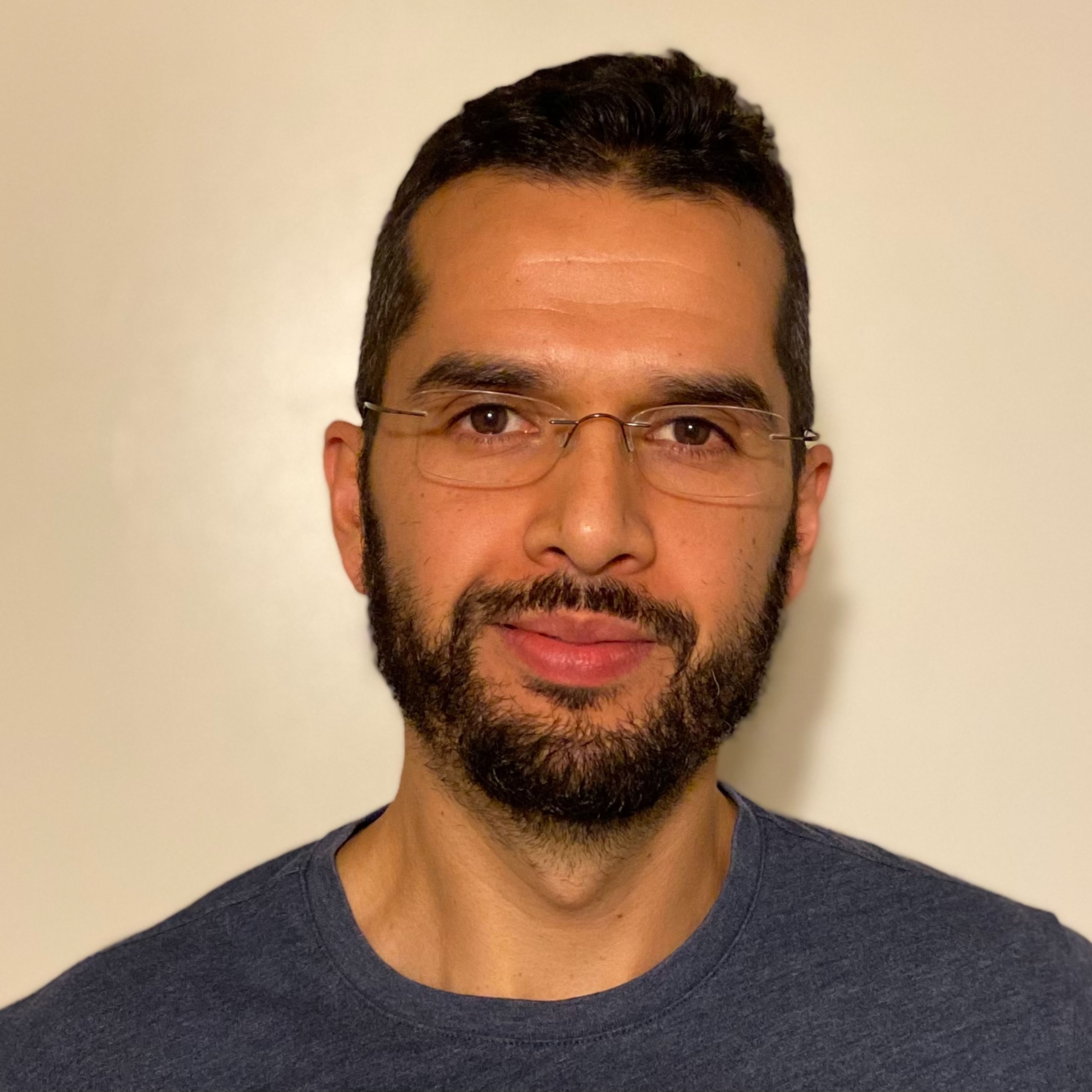
- Ricardo Iván Martínez Zamudio
- Assistant Professor
- Department: Department of Pharmacology
- Graduate Program(s): Cellular & Molecular Pharmacology
- Major Research Interest(s): Cancer Biology, Computational Biology, Epigenetics/ Chromatin, Gene regulation
- Research Techniques: Biochemistry, Bioinformatics / Computational, Cell culture, Genomics, Single Cell RNA Techniques
- Research Organism(s): Cell lines, Humans, Mice
- Rotation Faculty
- Phone: 1.7322355955
- Email:
This email address is being protected from spambots. You need JavaScript enabled to view it. - Robert Wood Johnson Medical School
- RWJMS Research Tower, Room 517
- 675 Hoes Lane West
- Piscataway, NJ 08854-8021
- Key Words: Transcription Factor Networks; Cell Fate Transitions; Senescence; Multiomics; Timeseries; Perturbation
- Lab Site URL